Every teacher has tried the prize box. You fill it with small toys in August, students pick from it in September, and by mid-October you are quietly restocking it out of your own pocket while the erasers and bouncy balls pile up under desks. It is expensive, it creates clutter, and the novelty wears off faster than almost any other classroom system.
The systems that survive a full school year tend to share a few traits: they are cheap enough to sustain, immediate enough to connect to the behavior, and specific enough that students know exactly what earned them. Here is how to build one before the first week starts.
Why immediate and specific beats big and delayed
A reward given three days after the fact, at the end of a points chart, is disconnected from whatever the student actually did. A small acknowledgment handed over in the moment lands harder, because the student can still remember the effort it was for.
This is also why "great job" is weaker than naming the thing. "You went back and checked your work" tells a student what to repeat. The reward is a marker for the sentence, not a substitute for it. Whatever system you pick, the words matter more than the object.
Stickers: small, immediate, and sustainable
Stickers survive because they solve the sustainability problem. They cost a fraction of a prize box, they take up almost no storage, and you can hand one over the second the moment happens rather than waiting for a Friday ceremony.
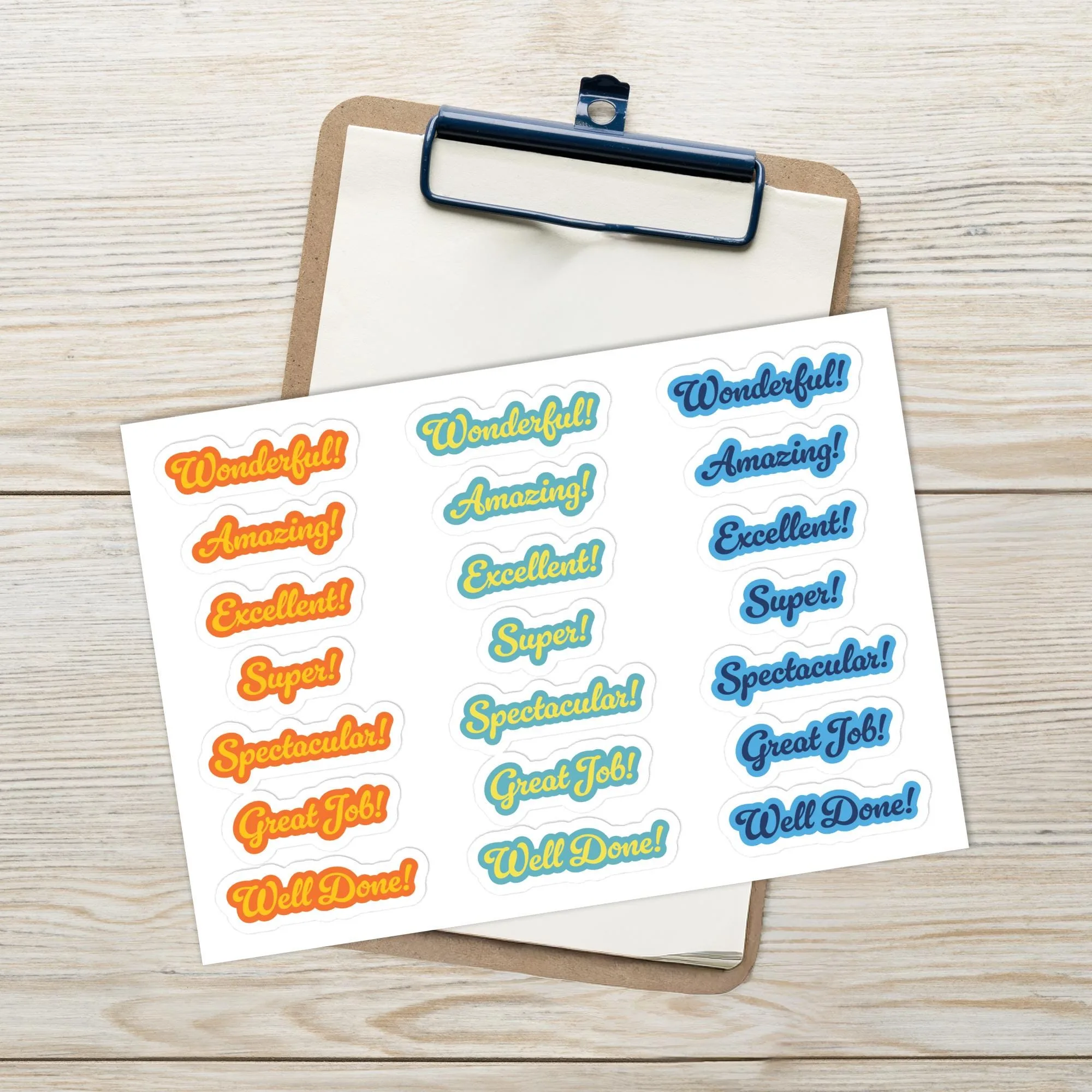
Our motivational teacher stickers are built for exactly this - glossy vinyl with a scratch-resistant finish, so they hold up to being stuck on a folder and handled all week. The yellow motivational design is a good all-purpose pick, and the red version gives you a second tier if you want to distinguish between everyday effort and something bigger.

Four systems that hold up all year
1. The catch-them-doing-it system
No chart, no tracking. You carry stickers in your pocket and hand them out when you catch a student doing the thing you have been asking for. The strength here is unpredictability - because it is not tied to a fixed schedule, students stay engaged rather than coasting until the next scheduled reward.
2. Whole-class goals
Individual rewards can quietly turn into competition, which is fine for some classes and corrosive in others. A whole-class version fixes that: the class collectively fills a chart, and everyone gets the payoff. It builds the sense that the room succeeds together, and it stops the same three students from winning everything.
3. The take-home note
A sticker on a paper that goes home does double duty - the student gets the acknowledgment, and a parent sees something positive from school that is not a behavior report. For students whose home communication skews negative, this one is worth more than it looks.
4. Name labels for the organizational chaos
Not every sticker is a reward. Name labels handle the other half of classroom life: cubbies, folders, book bins, supply boxes, and the annual mystery of whose water bottle that is. Setting these up in the first week saves a genuinely surprising amount of time later.

Setting it up before day one
Do this in August, not in week three when you are already underwater. Pick one system, not three - the most common failure is a teacher launching an elaborate multi-tier economy that takes fifteen minutes a day to administer and gets abandoned by Halloween.
Order enough to get through at least a full quarter so you are not rationing. Decide in advance what specifically earns recognition and write it down, because a system you have to improvise is a system you will apply inconsistently. And label the supplies before students arrive, while you still have quiet classroom time.
What to skip
Skip anything that requires daily upkeep from you - elaborate point banks, classroom currency with a store, individual charts for thirty students. Skip food rewards, given allergies and the range of family preferences. Skip systems where students can lose previously earned rewards, which tends to breed resentment rather than motivation. And skip the prize box, or at least demote it to an occasional thing rather than the backbone of your system.
The short version
Pick one sustainable system and actually run it. Make recognition immediate and name the specific behavior out loud. Use whole-class goals if competition is a problem in your room. Get your labels and supplies sorted before the first bell. The teachers who still have a functioning reward system in May are almost always the ones who kept it simple in August.
Stocking up for the year? Browse the full sticker collection - and if someone is shopping for you, our teacher gift guide is worth forwarding to them.