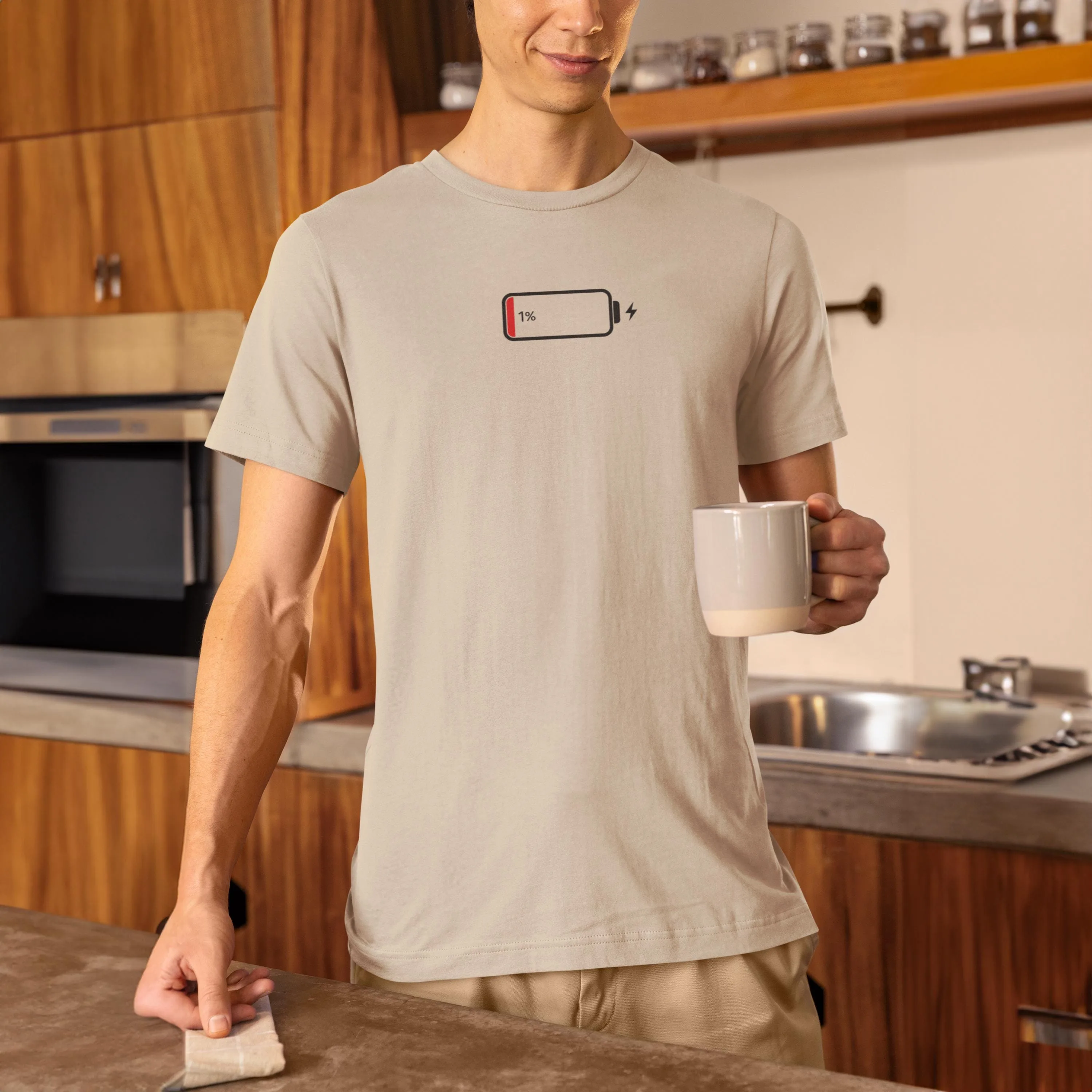
You bought a graphic tee. You loved it. You wore it. You washed it the way you wash everything else. And six months later the print on the front looks like it's been through a sandstorm.
This is not bad luck. Direct-to-garment prints fade for a small number of very specific reasons, and almost all of them are avoidable once you know what they are. Here's the actual wash, dry, and storage routine that keeps a graphic tee looking new - written by someone who prints them for a living.
The four things that actually kill a DTG print
Most "graphic tee care" advice online is a one-line "wash cold, hang dry" that doesn't tell you why. Here's the why:
- Heat. Direct-to-garment ink bonds to cotton fibers when it cures. Sustained heat above about 60°C / 140°F can break that bond and lift the ink, which is what fading actually is on a microscopic level.
- Friction. Every time the print rubs against another fabric - inside the washing machine, in the dryer, in a folded stack - a tiny amount of ink gets scrubbed off. Over hundreds of cycles, "tiny amount" becomes "visibly faded."
- Aggressive detergent. Bleach kills DTG ink almost instantly. Enzymatic detergents (the ones that say "removes tough stains") chew at the ink slowly over time. The cheaper the detergent, generally the more aggressive the formula.
- Time on the line. Direct sunlight is great for killing bacteria and terrible for keeping ink saturated. Hours of full sun every drying cycle adds up to visible fade in months.
Everything below comes down to managing those four factors.
The wash protocol that actually works
Most graphic tees, including the ones in our t-shirts collection, are 100% combed and ring-spun cotton, pre-shrunk, with the design printed via DTG. Here's how to wash them.
Turn the shirt inside out
This is the single highest-leverage thing you can do, and most people skip it. When the shirt is inside out, the print is protected from direct friction with the drum of the machine and from other clothes in the load. This one step probably doubles the life of a graphic tee.
Cold water, every time
Cold is below 30°C / 85°F. Most "cool" settings on modern machines are actually closer to 40°C / 105°F, which is enough to start degrading the ink bond over time. Use the "cold" or "delicate" setting explicitly. Bonus: cold water is also better for the cotton itself.
A gentle detergent - and skip the fabric softener
You don't need a special "graphic tee detergent." Any gentle, low-enzyme detergent works fine - Persil Sensitive, Tide Free & Gentle, the Method or Mrs. Meyer's lineups. Avoid anything that says "stain fighter" or "color booster" - those are all aggressive enzymes.
Skip fabric softener entirely. It coats the fibers, which traps the ink in a film that flakes off over time. Counterintuitive but real.
Don't overload the drum
Half-empty is better than full. The shirt needs room to move freely in the water; if it's wedged against zippers and buttons of other clothes, those edges scrape the print. Wash your graphic tees as a separate small load, or pair them only with other soft cotton items.
Drying - the part everyone gets wrong
The dryer is where most prints actually die. Hot air, constant tumbling, friction against the drum and other clothes - it's a hostile environment for ink.
The ideal: hang the shirt to dry, inside out, in indirect light. A drying rack in the corner of a room works. So does a hanger over a doorframe. Avoid full sun unless you genuinely have no other option.
If you have to use a dryer, use the lowest heat setting available (low or "air dry") and pull the shirt out while it's still slightly damp. Most of the heat damage happens in the last ten minutes of a normal cycle, when the fabric is already dry and just baking.
What about ironing?
Don't iron directly over the print. If you have to iron the shirt, do it inside-out with the iron on a low setting, or put a clean cotton cloth between the iron and the print. The same heat-and-pressure logic applies - direct heat will degrade the ink bond fast.
Storage matters more than you'd think
How you fold and store a graphic tee determines how it ages between wears. The print should never be on the outside of a fold. Fold inside out so the print is protected from rubbing against the rest of the pile, and store flat if you can - not crammed into a drawer where the weight of other clothes presses on the design.
Hanging is fine for short-term storage. Long-term hanging (months) can stretch the shoulders, especially on the lighter cotton weights. Fold for storage longer than a few weeks.
When fade is normal vs. when something went wrong
Some fade is inevitable on any garment after a few years of regular wear. That's the cotton itself aging, not the print failing. A well-cared-for graphic tee should look essentially new for the first 30–40 washes, lose maybe 10% of its print saturation by wash 100, and still be wearable past wash 200.
If your print is visibly cracking, flaking, or losing sharp edges within the first 20 washes, something went wrong. Usually it's heat - too hot a wash, too hot a dryer, or both. Sometimes it's a manufacturing issue (a bad cure), in which case the maker should make it right.
If the colors are bleeding into the fabric around the design, that's usually a sign of a substandard print process, not user error. Our shirts cure for 90 seconds at the correct temperature before they ever leave the production floor - which is why we don't get those complaints.
The short version
Inside out. Cold water. Gentle detergent, no softener. Hang dry, or low heat in the dryer pulled early. Fold inside out for storage. Don't iron the print.
Follow that for any graphic tee - ours, anyone's - and you'll get years of wear out of a shirt instead of months. The investment is roughly five extra seconds per wash cycle and zero extra dollars.
If you've been wearing the same favorite tee for so long that the print is finally starting to give up, here's the gentle nudge to replace it with something new before it gets to the rag-pile stage. Otherwise: keep washing it right, and it'll outlast most of the other shirts in your closet.