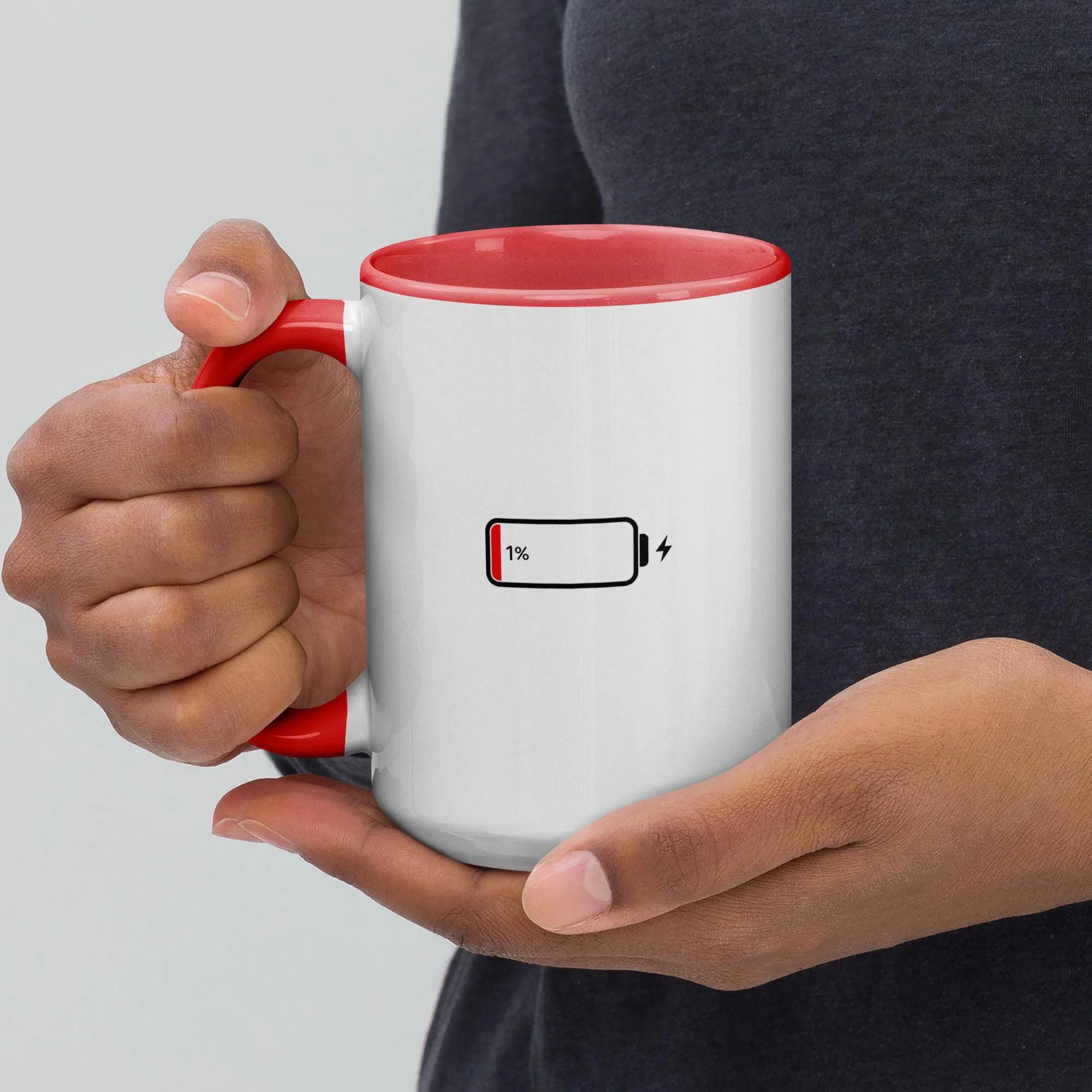
It looks like a trivial decision. Eleven ounces or fifteen ounces - four ounces of difference, who cares? But anyone who has ended up with the wrong mug knows the truth: a mug that's too small means constant refills, and a mug that's too big means cold coffee at the bottom every single time. The size you pick shapes your morning more than you'd expect.
Here's an honest breakdown of both sizes in our ceramic mug collection, and how to figure out which one is actually right for you or the person you're buying for.
What the numbers actually mean in practice
An 11 oz mug holds roughly a standard cup of coffee with room at the top so it doesn't slosh. A 15 oz mug holds about a cup and a half - noticeably taller and wider in the hand. That extra capacity sounds minor on paper, but in daily use it's the difference between one pour lasting your whole breakfast and needing a top-up halfway through.
Choose 11 oz if...
You drink espresso-based or smaller drinks
Cortados, flat whites, a focused single cup of tea, a modest pour of drip - the 11 oz is the right vessel. It keeps a smaller drink at the right proportion instead of leaving it looking lonely at the bottom of an oversized mug.
You like your coffee hot the whole way through
This is the underrated advantage. A smaller volume of coffee stays hot longer relative to how fast you drink it. If you're a sipper who nurses a cup, or you get distracted and come back to it, the 11 oz gets you to the bottom before it goes cold.
You have limited cabinet space or a small single-serve machine
The 11 oz fits comfortably under most single-serve brewers without you having to remove the drip tray, and it stacks more easily in a crowded cabinet.
Every zebra-stripe design comes in this size - the blue and white 11 oz is a good example of the format at its most versatile.
Choose 15 oz if...
You take your coffee seriously and in volume
If your morning is "one big cup, don't talk to me," the 15 oz is your mug. Fewer trips to the pot, fewer reheats, one satisfying pour that lasts. Our best-selling 1% Battery Caffeine mug is a 15 oz specifically because the people who love that design tend to be the people who need the bigger cup.
You add a lot of milk or cream
A heavy splash of milk in an 11 oz mug means you're basically drinking a small coffee. The 15 oz gives you room for a generous pour of coffee and your milk without overflowing.
You want the mug to make a statement on the desk
The larger surface area shows off a design better. If the mug is a gift and the graphic is the point - like the "I'm Ok I'm Just Tired" mug or a bold black and white zebra - the 15 oz gives the artwork more room to land.
The gifting angle: when in doubt, go 15
If you're buying a mug as a gift and you don't know the recipient's coffee habits down to the ounce, the 15 oz is the safer default. Here's the logic: a big-cup person handed an 11 oz will be mildly annoyed every morning. A small-cup person handed a 15 oz will simply not fill it all the way - no harm done. The bigger size fails more gracefully.
The exception is if you know they have a tiny kitchen, an espresso habit, or a strong preference for petite everything. Then match the person, not the safe default.
What both sizes have in common
Regardless of size, every mug in the collection is durable ceramic, dishwasher safe, and microwave safe. The prints are cured to resist fading, so the design survives the daily-use-plus-dishwasher cycle that kills cheaper printed mugs. The choice is purely about capacity and how the design reads at each scale - not about quality.
The short version
Small drinks, hot-to-the-last-sip, tight cabinets: go 11 oz. Big morning cup, lots of milk, design-forward gift: go 15 oz. Buying for someone whose habits you don't know: default to 15, because it's the size that's harder to get wrong.
Once you've settled the size question, the fun part is picking the design. The full mug collection is here - from zebra prints to caffeine humor to florals.